 Therapy, to me, is about discovery.
We humans are mysteries to ourselves. We find ourselves in messy situations and don’t know how we got there — or how to get out. We do things we regret and don’t know why, then turn around and punish ourselves for it. We have enormous capacity for joy, but also for deep suffering. And even though this seems to be a universal experience, we tend to carry the burden alone as we struggle and stew.
Sometimes the emotions that frighten us most — shame, rage, grief, fear — get exiled. Pushed into the Shadowlands of the unconscious, where we hope they’ll stay quiet. But they don’t. The more we ignore them, the harder they work to make themselves known. They show up in our patterns, our reactions, our relationships, our dreams.
Depth therapy is not about having the answers, or knowing the way. It’s about being willing to go into uncertain terrain, together. I think of myself less as a guide and more as a seasoned travelling companion. Someone who has made many  journeys, who won’t disappear or lean on you when things get rough, and has learned not to be afraid of getting lost – for that is exactly when the most important, necessary, and beautiful discoveries are often made.
Together, we begin by building what you’ll need for the journey: tools for safety and steadiness, a growing capacity to read your own inner weather — to recognize when your nervous system sounds the alarm, and to find your way back to stable ground. Next we start to map the terrain — looking for patterns in thoughts, behaviours, emotional responses. Sometimes symbols, images, or dreams appear as unexpected signposts along the way.
Deeper in, we enter the shadowlands. This part of the work asks something of  you — and we move through it carefully, at a pace your system can sustain. Some of it involves grieving, or sitting with emotions that feel unbearable. But through this, something shifts: what once felt monstrous begins to reveal itself as misunderstood. These exiled parts carry messages — communications from a truer self — about what you need, what you want, who you actually are, and always were.
The goal is not to arrive somewhere fixed, but to become someone who knows how to navigate life, relationships, and transitions; someone equipped and experienced enough to continue exploring confidently on your own.
Wherever you currently are on your path — if you find yourself curious about your own inner world, willing to face what you find there — perhaps I can be a trustworthy ally to walk with you on your journey.
Good To Know
Is this the right kind of therapy for me?
Depth therapy asks you to slow down, turn inward, and stay with difficult material. It isn’t a quick fix, and it isn’t primarily skills-based. If you’re looking for someone to help you understand yourself at a deeper level — not just manage symptoms but explore their roots — this may be a good fit. If you’re unsure, the best way to find out is to reach out and have a conversation.
What happens in a session?
There’s no fixed agenda. We follow what’s alive for you — what’s been on your mind, what’s been showing up in your body, your dreams, your relationships. Over time, patterns emerge and the work deepens. Sessions are 50 minutes.
Is there a structure to how we work together?
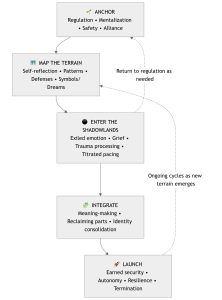 Loosely, yes. Most depth work moves through a general shape: building safety and steadiness first, then noticing patterns as they surface, then working through harder material — grief, old wounds, feelings that got pushed aside — at a sustainable pace. Over time, that material gets integrated, and many clients reach a point where they feel ready to continue the work on their own.
It’s rarely a straight line. Circling back to the steadying work is common, especially when something new comes up. Most clients move back and forth between these stages more than once.
Do you offer a consultation?
Yes. Before we begin, we’ll have an initial conversation to make sure this feels like a good fit for both of us. I want you to have a sense of who I am and how I work before you commit to anything.
What about confidentiality?
Everything you share in therapy is confidential. [Placeholder — insert exact wording from your consent forms here, including exceptions.]
How do I get started?
Reach out by email. You don’t need to have the right words — a simple “I’m interested” is enough to begin.